
Some of the most powerful encounters with other species are painful rather than joyful.
Aldo Leopold, an American conservationist and author best known for A Sand County Almanac, once described shooting a mother wolf and watching the “green fire” fade from her eyes as she died. That moment changed him completely. After that, he no longer hunted wolves but fought to protect them as essential to healthy ecosystems.
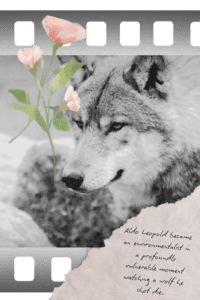 Why did that particular wolf matter, when Leopold had shot many before?
I believe it was the proximity to vulnerability and suffering. There’s something about being close—close enough to see, to touch, to witness—that makes separation impossible.
David Abram, an American ecologist and philosopher known for writing about perception and the more-than-human world, says that we’re wired to feel a kind of empathy for the living land. When we protect ourselves from vulnerability—when we stay distant and insulated—we also cut ourselves off from something that can feed us deeply: real contact with other forms of life. Direct experiences with “otherness,” especially when care is involved, can bring awe and wonder.
I felt this myself on a winter morning while clearing snow off my bird feeders. A red-breasted nuthatch circled my head, and without really thinking, I poured seed into my hand. He landed on my palm just long enough to grab a single seed and fly away. For that brief moment, I felt his feet on my skin—and I realized he had trusted me with his safety. It was a humbling experience..
Abram suggests that a real environmental ethic won’t come from rules and laws alone. It grows when we pay attention again—when we remember, through our senses, that we live in a lively, responsive world. Intimate encounters matter. Touch, eye contact, presence—these are what change us.
If an ecological spirituality is emerging for us, it’s being born in moments like these.