
The idea of a spiritual ecology—a sense of sacred relationship with the natural world—has roots in philosophy as well as lived experience.
Ernst Haeckel, a German biologist and philosopher who coined the term “ecology,” believed that one set of natural laws shapes everything—matter, energy, and life itself. Influenced by Baruch Spinoza, a 17th-century Dutch philosopher who argued that God and nature are ultimately the same reality, Haeckel imagined an environmental ethics rooted in that shared oneness. What this points to is that every being matters, and shared experience can carry a spiritual weight.
 Later thinkers like Arne Næss, a Norwegian philosopher and founder of the deep ecology movement, encouraged people to build their own “ecosophy”—their personal, lived ecological philosophy—through observation and experience. But those ideas can stay in the head unless they’re grounded in deep, emotional encounters.
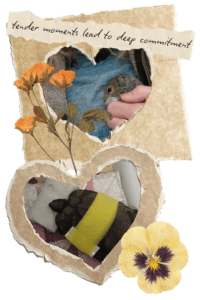
Stephan Harding, a British ecologist known for his work in holistic science and ecological education, describes ecological wisdom as emerging through deep experience, deep questioning, and deep commitment. For me, those deep experiences have come through wildlife rehabilitation. Holding a baby squirrel. Sitting with dying turtles who can’t be saved. Nursing an injured opossum through her final days after her babies were old enough to survive on their own.
These experiences changed me. They led me to question violence toward animals and how we share the land with them.
These encounters also touch something many people now call animism. Religious studies scholar Graham Harvey—an influential voice in contemporary “new animism”—puts it this way: animism is “the understanding that the world is a community of persons, most of whom are not human, but all of whom deserve respect.” Taking that seriously asks something of us. It means learning to notice personhood in unexpected places—and being willing to meet minds and lives that are very different from our own.
Once we recognize our relatedness, the deeper question becomes: what does respect actually look like? For those who see humans as separate from nature, the answer often comes from external rules and minimum standards. But direct encounters—especially those involving vulnerability and trust—can dissolve the myth of separateness altogether.
Wildlife rehabilitators live within this reality every day. We form relationships with more-than-human beings, and respect grows from those relationships. My own commitment now includes creating opportunities for others to experience this kind of connection, in the hope that a deeper spiritual ecology can keep taking root.
The idea of a spiritual ecology—a sense of sacred relationship with the natural world—has roots in philosophy as well as lived experience.
Ernst Haeckel, a German biologist and philosopher who coined the term “ecology,” believed that one set of natural laws shapes everything—matter, energy, and life itself. Influenced by Baruch Spinoza, a 17th-century Dutch philosopher who argued that God and nature are ultimately the same reality, Haeckel imagined an environmental ethics rooted in that shared oneness. What this points to is that every being matters, and shared experience can carry a spiritual weight.
Later thinkers like Arne Næss, a Norwegian philosopher and founder of the deep ecology movement, encouraged people to build their own “ecosophy”—their personal, lived ecological philosophy—through observation and experience. But those ideas can stay in the head unless they’re grounded in deep, emotional encounters.
Stephan Harding, a British ecologist known for his work in holistic science and ecological education, describes ecological wisdom as emerging through deep experience, deep questioning, and deep commitment. For me, those deep experiences have come through wildlife rehabilitation. Holding a baby squirrel. Sitting with dying turtles who can’t be saved. Nursing an injured opossum through her final days after her babies were old enough to survive on their own.
These experiences changed me. They led me to question violence toward animals and how we share the land with them.
These encounters also touch something many people now call animism. Religious studies scholar Graham Harvey—an influential voice in contemporary “new animism”—puts it this way: animism is “the understanding that the world is a community of persons, most of whom are not human, but all of whom deserve respect.” Taking that seriously asks something of us. It means learning to notice personhood in unexpected places—and being willing to meet minds and lives that are very different from our own.
Once we recognize our relatedness, the deeper question becomes: what does respect actually look like? For those who see humans as separate from nature, the answer often comes from external rules and minimum standards. But direct encounters—especially those involving vulnerability and trust—can dissolve the myth of separateness altogether.
Wildlife rehabilitators live within this reality every day. We form relationships with more-than-human beings, and respect grows from those relationships. My own commitment now includes creating opportunities for others to experience this kind of connection, in the hope that a deeper spiritual ecology can keep taking root.