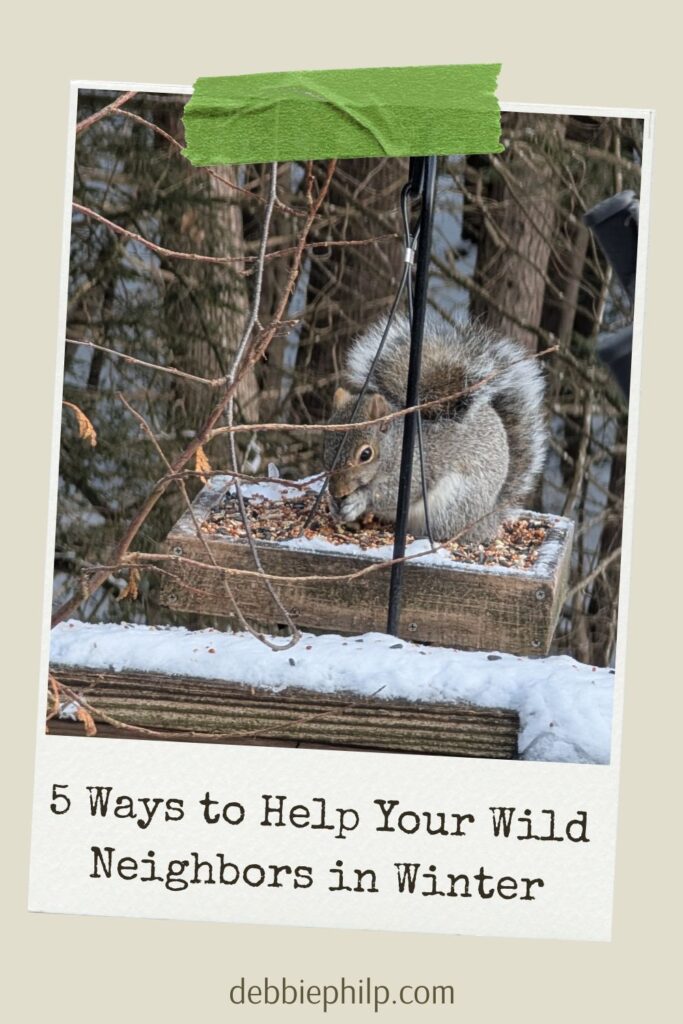
For the wildlife in your neighborhood who don’t migrate or hibernate, winter can be deadly. Sure, they have adaptations that help, but frigid temperatures and storms challenge even the fluffiest squirrel fur. Try these five things to help your wild neighbors survive in winter.
1. Offer food consistently.#
Winter is not the time to skimp on filling your feeders, nor is it time to try to keep the squirrels out. If there is snow or ice, critters that cache food, like squirrels and blue jays, are desperate for something to eat. If you live in bear country, like I do, it is safe to put the feeders out while the bears are hibernating. Peanuts are a great treat, but offer a good mix of seeds, nuts, and dried fruit in feeders that are accessible to all. I like simple platform feeders. I fill them every morning and they are empty by afternoon. Food that gets knocked on the ground is enjoyed by mourning doves, wild turkeys, and, occasionally, deer.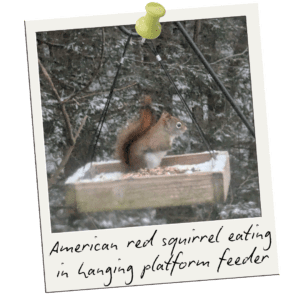
2. Provide water.#
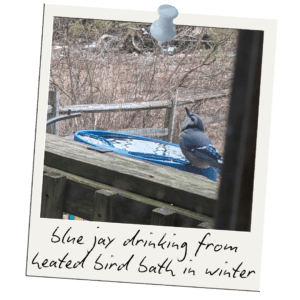
When temperatures drop below freezing, open water becomes almost impossible to find, and dehydration is as big a risk as starvation. Fill a bird bath or big plant saucer with warm water twice a day. Water in a dish on the ground will freeze more slowly than one on a stand. If it’s feasible for you, heated bird baths or an added coil heater is a good idea. I have a heated bird bath that hangs on my deck rail. I use it year-round but only plug it in when it starts to get cold. You still must add water regularly because the water will evaporate but less frequently than with an unheated bird bath.
3. Let the seed heads stand.#
Gardens that support wildlife are rarely tidy enough for societal norms, but your wild neighbors need you to be a rebel. Resist the urge to cut down the dead (hopefully native) wildflowers. I have seen the smaller birds, like chickadees and juncos, picking seeds off goldenrod, black-eyed susans, coneflowers, and evening primrose around my house. By growing native plants and leaving the brown stalks in autumn, you are providing a natural food source. Plus, you are helping the pollinators in spring and summer.
4. Leave the leaves.#
Leaf litter is a blanket that protects many species in winter, from insect larvae to frogs to box turtles. Decaying leaves also add nutrients to the soil. If you must rake, forego the bags and use the leaves to mulch your gardens. If you happen to uncover a critter while moving leaves, please put the leaves back as thickly as they were and let them be.
5. Build a brush pile.#
There is nothing like a big pile of branches and brush to keep wildlife safe during the winter. A brush pile provides shelter from both the weather and predators. If you brought a cut tree into your house for Yule, remove the decorations and put that out on its own or add it to the brush pile. Just make sure it is free from tinsel and plastic berries before you take it outside. Critters may continue to use the brush pile to nest in the spring, so do not burn it before carefully checking through it or breaking it down and moving it first.
You can never make wildlife as comfortable in winter as you are inside your home. With just a few considerations, though, you can care for your wild community and help everyone survive the cold months.