
Time in nature is well known to support mental health. Gardening, in particular, has been linked to increased well‑being, stress reduction, and improved mood. But the benefits aren’t equal across all types of gardens.
Research shows that gardens with greater biodiversity provide deeper psychological rewards. That means a garden filled with life – birds, squirrels, plants, insects – offers more benefit than a typical American lawn.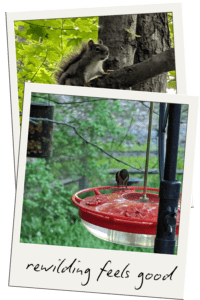
Wildlife gardens also encourage a slower pace. Watching animals requires patience, which naturally reduces stress. Gardening itself can create a meditative flow state that helps calm the mind.
In studies of wildlife gardeners, people reported feeling more satisfaction and confidence as they learned to work with native plants and saw wildlife using their gardens. That learning process encouraged experimentation and increased long‑term stewardship.
Gardening also provides physical benefits. It is a low‑impact activity accessible to many people. When gardens also include food plants, they can improve nutrition and healthy eating habits.
Rewilded backyards support wellness in multiple ways—mental, physical, and emotional—while simultaneously benefiting the ecosystem. They really bring well-being to all beings.